There are places that sneak up on you, whispering their secrets only when you’re ready to listen. For years, my summer travels followed a predictable rhythm—the Amalfi Coast, the Greek islands, the French Riviera—until a chance detour led me to a crescent-shaped bay on Italy’s lesser-known eastern shore. This is how I discovered Monopoli, a sun-drenched Puglian town that has quietly become my favorite summer sanctuary.
The first thing that strikes you about Monopoli isn’t its beauty—though that comes soon enough—but its authenticity. Unlike its polished northern cousins, this town wears its history like a comfortable old sweater. The historic center isn’t a preserved museum piece but a living, breathing neighborhood where grandmothers hang laundry between ancient stone buildings and fishermen mend nets within sight of Byzantine walls. There’s a particular magic in watching daily life unfold against a backdrop that hasn’t changed substantially in five centuries.
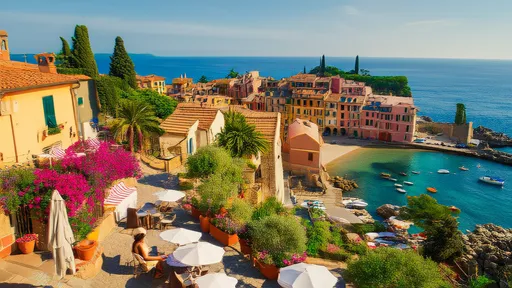
Morning in Monopoli begins with the sea. The Adriatic here possesses a particular quality of light, a crystalline blue-green that seems to generate its own illumination. While other Mediterranean beaches become crowded by mid-morning, Monopoli’s coastline offers hidden coves and sandy stretches where you can still find solitude. The water temperature in August hovers at that perfect point—cool enough to refresh but warm enough to stay in for hours. Floating on my back in the gentle swells, watching the sun climb over the old town’s skyline of church domes and medieval towers, I understood why locals refer to this sea with proprietary affection.
The historic center, surrounded by formidable defensive walls built to ward off Ottoman invaders, reveals itself gradually. Narrow alleyways twist unexpectedly into sunlit piazzas where children chase soccer balls and old men play cards at rickety tables. Unlike the planned perfection of other Italian historic districts, Monopoli’s old town feels organic, almost accidental in its beauty. Whitewashed houses adorned with bright geraniums stand beside Baroque churches, their facades telling stories of maritime republics, Norman conquerors, and Spanish nobility.
What truly sets Monopoli apart is its relationship with time. The afternoon siesta isn’t just a tradition here—it’s a fundamental law of nature. Between two and four o’clock, the town falls into a profound silence broken only by the distant hum of fishing boats and the occasional scooter. Shutters close, shops lock their doors, and the streets empty as everyone retreats from the midday heat. At first, this stillness felt unsettling to my productivity-obsessed mindset, but within days I came to cherish this daily pause, this collective acknowledgment that some hours are meant for rest rather than accomplishment.
The culinary landscape reflects Monopoli’s position between land and sea. Unlike the cream-heavy dishes of northern Italy, Puglian cuisine celebrates simplicity and freshness. I still dream about the orecchiette con le cime di rapa—the iconic ear-shaped pasta with bitter greens—served at a family-run trattoria where the recipes haven’t changed in three generations. At the morning fish market, fishermen sell their catch directly from wooden crates, their voices rising in the distinctive melodic dialect of southern Puglia. Buying sea urchins cracked open on the spot or silvery anchovies still gleaming with seawater feels like participating in a ritual that predates tourism itself.
As evening approaches, the town undergoes its daily transformation. The passeggiata—that beloved Italian tradition of the evening stroll—feels particularly magical here. Families, couples, and friends of all ages emerge as the heat relents, filling the lungomare waterfront promenade with laughter and conversation. Unlike the fashion-parade atmosphere of Milan’s Via Monte Napoleone or Rome’s Via del Corso, Monopoli’s evening ritual feels genuinely communal rather than performative. Teenagers flirt shyly near the ancient watchtowers, grandparents push strollers, and fishermen head out for night fishing—all moving to the same unhurried rhythm.
The magic intensifies after dark. Restaurants set tables directly on the sand, their lights reflecting in the dark water. The air carries competing scents of grilling fish, wood-fired pizza, and the briny tang of the sea. At a beachfront restaurant, I tasted the most remarkable dish of my visit—riso, patate e cozze, a layered casserole of rice, potatoes, and mussels that embodies Puglia’s humble culinary genius. As I ate, listening to the waves kiss the shore just meters away, I realized that this was the Italy I’d been searching for—not the curated version presented in guidebooks, but the real, messy, glorious thing.
Monopoli’s cultural offerings, while modest compared to Florence or Venice, possess an intimate charm. The Cathedral’s crypt contains the relics of local saints and martyrs, including the town’s patron Saint Gerard, whose festival in October transforms the streets into a vibrant celebration. The Castle of Charles V, built in the 16th century, now hosts art exhibitions in its cavernous halls. But the true cultural wealth lies in unexpected moments—stumbling upon a neighborhood festival honoring a minor saint, or hearing traditional pizzica music spilling from a basement tavern.
What I came to appreciate most about Monopoli was its resistance to the homogenizing forces of mass tourism. The town has managed to preserve its identity while welcoming visitors. You won’t find international chain stores on the Corso Vittorio Emanuele, only family-owned businesses that have operated for generations. The barista remembers your coffee order after two visits, the fruit vendor teaches you how to select the sweetest figs, and the fisherman nods recognition when you return to buy more of his spectacular prawns. These small connections create a sense of belonging that luxury resorts can’t manufacture.
The surrounding countryside offers delightful excursions that reveal Puglia’s diverse character. The trulli houses of Alberobello, with their mysterious conical roofs, stand in surreal contrast to Monopoli’s Mediterranean architecture. The white city of Ostuni gleams like a pearl on its hilltop, while the grottoes of Polignano a Mare offer dramatic swimming spots beneath towering cliffs. Yet each evening, returning to Monopoli felt like coming home—the familiar sight of the cathedral bell tower against the twilight sky signaling refuge from the more tourist-heavy destinations nearby.
My final morning arrived with the bittersweet awareness that comes when a place has gotten under your skin. Sitting at my usual café overlooking the old port, watching fishing boats return with their night’s catch, I understood why Monopoli had captured me so completely. It isn’t just the beauty—though the beauty is extraordinary—but the preservation of a way of life that feels increasingly rare. In a world where popular destinations often become parodies of themselves, Monopoli remains unapologetically itself.
As my train pulled away, passing the ancient walls that have guarded this town for centuries, I made a promise to return. Not just for the perfect orecchiette or the crystalline waters, but for the feeling that here, summer still moves at its proper pace—measured not in checked-off attractions but in lingering meals, spontaneous conversations, and the simple joy of watching sunlight dance on ancient stone. Monopoli doesn’t just offer an escape from ordinary life; it offers a reminder of how life should be lived.
By James Moore/Nov 10, 2025
By Samuel Cooper/Nov 10, 2025
By Daniel Scott/Nov 10, 2025

By Elizabeth Taylor/Nov 10, 2025

By William Miller/Nov 10, 2025
By Joshua Howard/Nov 10, 2025
By Joshua Howard/Nov 10, 2025
By Benjamin Evans/Nov 10, 2025

By Daniel Scott/Nov 10, 2025

By Lily Simpson/Nov 10, 2025
By Sophia Lewis/Nov 10, 2025
By Elizabeth Taylor/Nov 10, 2025

By Daniel Scott/Nov 10, 2025

By Emily Johnson/Nov 10, 2025

By Olivia Reed/Nov 10, 2025
By Thomas Roberts/Nov 10, 2025

By Megan Clark/Nov 10, 2025
By John Smith/Nov 10, 2025
By Olivia Reed/Nov 10, 2025
By Ryan Martin/Nov 10, 2025
