I had arrived in Ghent with the weary skepticism of a traveler who believed they had seen all of Europe's hidden gems. My itinerary was a checklist of the usual suspects, the cities that scream for attention from postcards and travel influencers. Ghent was a mere footnote, a two-day stopover between the grandeur of Bruges and the bustle of Brussels.
I expected a smaller, quieter, perhaps slightly grubbier version of its more famous Flemish siblings. What I found, instead, was a city that didn't just charm me; it quietly, insistently, stole a piece of my heart, leaving a sweet, aching void the moment I left.
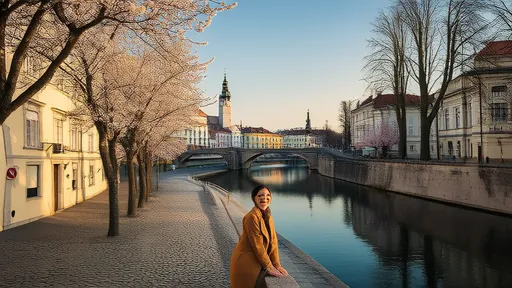
The theft began not with a grand cathedral or a sprawling square, but with a quiet, cobbled street along the Graslei quay. I arrived just as the morning mist was beginning to burn off the canals, revealing a scene that felt less like reality and more like a meticulously painted backdrop. The medieval guildhouses stood shoulder-to-shoulder, their ornate facades reflected perfectly in the still, dark water of the Leie River. There was no fanfare, no crowds jostling for the perfect shot. Just the soft lapping of water against stone and the occasional swan gliding past with regal indifference. I sat on the cold stone steps, a coffee warming my hands, and simply watched the city wake up. This was not a place performing for tourists; it was a place simply being, and in that unassuming authenticity, its magic was laid bare.
As the day progressed, I wandered aimlessly, letting the cobblestones guide my feet. Ghent refuses to be pigeonholed. One moment, you are in the shadow of the formidable Gravensteen Castle, its grey stone walls whispering tales of counts and conquests. It’s a stark, almost brutalist structure plopped unceremoniously in the middle of the city, and you can almost feel the weight of its history. Then, you turn a corner and find yourself in the Patershol district, a labyrinth of narrow alleys now teeming with bohemian cafes, tiny art galleries, and the scent of international cuisine wafting from tucked-away restaurants. The contrast is not jarring but harmonious. Ghent is a city that wears its centuries lightly, where a 13th-century fortress coexists with a vibrant, modern student population that infuses the ancient streets with a palpable, buzzing energy.
The city's soul, I discovered, is deeply intertwined with its waterways. I abandoned walking for an hour and hired a small boat. From the water, Ghent unfolds like a living storybook. The perspective shifts; you are no longer a spectator on the street but a participant gliding through the city's veins. Our guide, a local with a dry wit, pointed out details invisible from land—the carvings on the undersides of bridges, the secret gardens of canal-side homes, the way the Belfry of Ghent seems to track your progress, its dragon weathervane keeping a watchful eye over the city. He spoke not with the rehearsed tone of a tour guide, but with the genuine pride of someone sharing his home. He told us about the city's history as a medieval powerhouse of the cloth trade, and how that legacy of wealth and rebellion is etched into every building. It was on that boat, with the cool breeze on my face and the city's history echoing off the water, that I felt a profound connection to this place.
As evening descended, Ghent underwent another transformation. The historical center, which by day is a masterpiece of stone and light, became a canvas for one of the most ambitious urban light art projects in the world. As darkness fell, strategically placed projectors bathed the city's most iconic monuments in a symphony of colored light. The Saint Bavo Cathedral, the Belfry, and the Saint Nicholas' Church were no longer static relics; they were alive, pulsating with blues, purples, and golds. It was breathtaking, a fusion of ancient architecture and cutting-edge technology that felt both respectful and revolutionary. It wasn't a gimmick; it was a love letter to the city's own beauty, written in light for all to see.
But the true heart-stealing moment came later, in a small, dimly lit bar tucked away from the main thoroughfares. It was here I encountered the true spirit of Ghent: its people. I fell into conversation with a group of locals—an artist, a university professor, and a brewer. They were passionate, opinionated, and fiercely proud of their city, yet devoid of any pretension. They spoke of Ghent not as a museum piece, but as a living, breathing, evolving community. They recommended a 'jenever' from a local distillery, a sharp, juniper-flavored gin that warmed me from the inside out. We talked for hours about everything from Flemish politics to the best fries in the city (they insisted, correctly, that it was a tiny stall called 'Frites Atelier'). There was no rush, no sense of needing to be somewhere else. This was the Ghent that guidebooks can't capture: the warmth, the intellect, the effortless conviviality of its residents.
Leaving Ghent felt like a personal loss. As my train pulled away from the station, I watched the spires of the three towers—the faithful trinity that guards the skyline—shrink into the distance. I had arrived with a checklist and left with a longing. Ghent doesn't overwhelm you with a single, monolithic identity. It doesn't have the frantic romance of Paris or the sprawling history of Rome. Its appeal is subtler, more complex. It's in the quiet dignity of its morning canals, the vibrant clash of old and new in its streets, the breathtaking spectacle of its illuminated nights, and, most of all, in the genuine warmth of the people who call it home.
So, yes, this underrated European city stole my heart. It didn't snatch it in a dramatic, cinematic moment. It gently pried it open with its understated beauty, its intellectual curiosity, and its quiet confidence, and then it simply took up residence. And now, a part of me remains there, forever wandering those wet cobblestones, forever watching the swans on the Graslei, forever waiting for my return.
By James Moore/Nov 10, 2025
By Samuel Cooper/Nov 10, 2025
By Daniel Scott/Nov 10, 2025

By Elizabeth Taylor/Nov 10, 2025
By William Miller/Nov 10, 2025
By Joshua Howard/Nov 10, 2025
By Joshua Howard/Nov 10, 2025
By Benjamin Evans/Nov 10, 2025
By Daniel Scott/Nov 10, 2025
By Lily Simpson/Nov 10, 2025
By Sophia Lewis/Nov 10, 2025
By Elizabeth Taylor/Nov 10, 2025
By Daniel Scott/Nov 10, 2025
By Emily Johnson/Nov 10, 2025
By Olivia Reed/Nov 10, 2025
By Thomas Roberts/Nov 10, 2025
By Megan Clark/Nov 10, 2025
By John Smith/Nov 10, 2025
By Olivia Reed/Nov 10, 2025
By Ryan Martin/Nov 10, 2025
