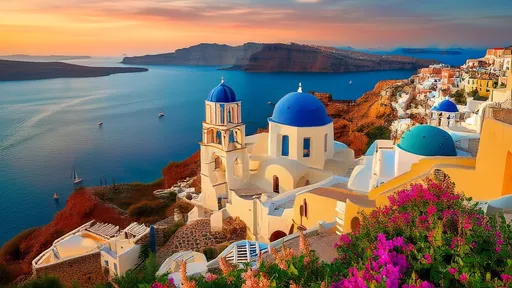
There are places that exist in travel brochures and Instagram feeds, and then there are places that live in your bones long after you've returned home. The Greek island of Amorgos is decidedly the latter. While its more famous Cycladic neighbors—Santorini with its iconic blue domes, Mykonos with its pulsating nightlife—have become almost caricatures of themselves through overexposure, Amorgos remains stubbornly, beautifully authentic. It is an island that doesn't merely pose for pictures; it demands to be felt, tasted, and remembered.
Your first encounter with Amorgos is a lesson in dramatic understatement. The ferry doesn't dock at a bustling, glamorous port lined with cocktail bars. Instead, it nudges into Katapola, a sleepy, horseshoe-shaped bay where colorful fishing boats bob gently on turquoise water. The air smells of salt, wild thyme, and the faint, smoky scent of grilling octopus. There are no swarms of tourists elbowing for space, no aggressive restaurant touts. Just a profound, almost palpable sense of calm. This is the island's first whisper, a quiet assurance that you have arrived somewhere different, somewhere real.
The landscape itself is a character in the Amorgos story. It is a rugged, mountainous spine of an island, sculpted by the meltemi winds into a breathtaking tapestry of terraced hills, hidden coves, and sheer cliffs that plunge into a sea of impossible blue. Driving the narrow, winding roads is an adventure. You'll navigate hairpin turns only to be rewarded with sudden, heart-stopping vistas of the Aegean stretching to the horizon. The light here is different—sharper, cleaner, drenching the whitewashed villages in a brilliance that feels both ancient and brand new.
At the heart of Amorgos, both geographically and spiritually, lies the Monastery of Panagia Hozoviotissa. Clinging precariously to the face of a 300-meter cliff, this 11th-century marvel is more than a tourist attraction; it is the soul of the island. The climb up the steep, whitewashed path is a pilgrimage in miniature. With each step, the noise of the modern world falls away, replaced by the sound of the wind and the distant crash of waves below. Upon arrival, you are greeted by quiet, robed monks who offer you a traditional welcome of loukoumi and a glass of cool water. The view from the narrow balconies is not just a photo opportunity; it is a spiritual experience, a dizzying perspective that seems to hang between heaven and earth.
Beyond the monastery, the island's main town, Chora, is a labyrinth of discovery. A fortified Venetian castle sits at its peak, a silent sentinel watching over a maze of narrow, winding alleys. Here, you won't find chain stores or generic souvenir shops. Instead, you'll discover tiny, family-run tavernas where the menu is written on a chalkboard, artisanal workshops selling handmade ceramics, and old women sitting on their doorsteps, smiling as you pass. As dusk settles, the whitewashed houses glow with a soft, pinkish light, and the scent of jasmine fills the air. It is a place that feels untouched by time.
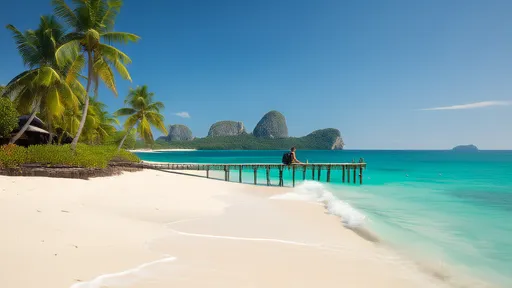
But the true, unadulterated magic of Amorgos reveals itself along its coastline. While other islands boast of their sandy beaches, Amorgos offers something more raw and elemental. Agia Anna, a small, pebbled cove near the monastery, is famous as a filming location for the French film The Big Blue. Its crystal-clear waters and dramatic rock formations are mesmerizing. Yet, the real treasures are the secret spots accessible only by foot or boat. Places like Kalotaritissa, a stunning stretch of sand reached by a rugged path, or the isolated bay of Gramvousa, where you can often find yourself completely alone, with only the sun and the sea for company. Swimming in these waters is an immersion in pure, liquid sapphire.
The culinary journey on Amorgos is a testament to its authenticity. This is not an island for fussy, molecular gastronomy. This is where you eat what the land and sea provide. In a small taverna in the village of Tholaria, you might be served patatato, a slow-cooked goat stew with potatoes in a rich tomato sauce, a recipe that has been passed down through generations. In a seaside eatery in Aegiali, the catch of the day—perhaps grilled sea bream or barbouni—is so fresh it tastes of the ocean itself. And you cannot leave without trying the island's unique spirit, rakomelo, a warming blend of raki, honey, and spices that locals believe has curative powers. Every meal is a connection to the island's rhythm and its people.
What truly sets Amorgos apart, however, is its pace. This is an island that forces you to slow down. There is no frantic rush to see a dozen sights before sunset. A day's plan might consist of a morning swim, a long, lazy lunch under a vine-covered pergola, an afternoon nap, and an evening stroll. The island's energy is introspective and calming. It invites you to sit at a kafenion, sip a thick Greek coffee, and simply watch the world go by—a world that moves at the speed of a donkey's clip-clop on cobblestones.
As your time on Amorgos draws to a close, you begin to understand its profound allure. The photos you took of the brilliant white architecture against the blue sky, the stunning coastal views, the charming alleyways—they are beautiful, to be sure. But they are mere shadows. They cannot capture the feeling of the warm, dry wind on your skin, the taste of sun-ripened figs picked straight from the tree, the sound of Byzantine chant echoing from a tiny chapel, or the profound sense of peace that settles deep within you. Amorgos is an island that gets under your skin. It changes you subtly, reminding you of a simpler, more profound way of being. It is, in every sense, infinitely better than the photos.
By James Moore/Nov 10, 2025
By Samuel Cooper/Nov 10, 2025
By Daniel Scott/Nov 10, 2025
By Elizabeth Taylor/Nov 10, 2025
By William Miller/Nov 10, 2025
By Joshua Howard/Nov 10, 2025
By Joshua Howard/Nov 10, 2025
By Benjamin Evans/Nov 10, 2025
By Daniel Scott/Nov 10, 2025
By Lily Simpson/Nov 10, 2025
By Sophia Lewis/Nov 10, 2025
By Elizabeth Taylor/Nov 10, 2025
By Daniel Scott/Nov 10, 2025
By Emily Johnson/Nov 10, 2025

By Olivia Reed/Nov 10, 2025
By Thomas Roberts/Nov 10, 2025
By Megan Clark/Nov 10, 2025
By John Smith/Nov 10, 2025
By Olivia Reed/Nov 10, 2025
By Ryan Martin/Nov 10, 2025