The overhead bin clicked shut with that final, definitive sound that every traveler dreads. I was standing in the aisle of a packed Boeing 777, my carry-on suitcase rejected for being a hair too bulky. My heart sank. My entire 10-day trip to Europe—spanning the chilly mornings of London, the drizzly afternoons of Amsterdam, and the sunny but crisp evenings in Prague—was in that bag.
As I watched it get tagged and hauled away to the cargo hold, I made a vow. I would never again be at the mercy of an airline's whims or my own packing incompetence. That disastrous flight was the catalyst for a complete packing overhaul, a journey that led me to a single, transformative hack that didn't just save space; it saved my entire travel experience.
My previous packing philosophy was simple, albeit flawed: cram and hope. I would lay everything out on my bed, a mountain of "just in case" items, and then perform a ritual of sitting on the suitcase until the zippers reluctantly closed. The result was a back-breaking bag, a chaotic jumble of clothes, and the constant anxiety of exceeding weight limits. I was a slave to my luggage, my movements dictated by where I could drag or roll my heavy case. I spent more time worrying about my belongings than enjoying the cobblestone streets and vibrant cultures I had paid to see. I knew there had to be a better way, a system that prioritized freedom and flexibility over being prepared for a hypothetical fashion emergency in five different climates.
The breakthrough came not from a travel blog or a glossy magazine, but from a moment of sheer frustration. I was staring at a tangled mess of cables, socks, and toiletries at the bottom of my bag when I remembered a lesson from basic physics: nature abhors a vacuum. I wondered if I could use that to my advantage. I rushed out and bought a set of large, durable vacuum storage bags, the kind you see advertised for storing seasonal bedding. But my plan wasn't to store them away in an attic; it was to bring them with me. This was the core of my hack. I wasn't just compressing clothes; I was creating a modular, organized, and incredibly efficient packing system.
The process begins at home, days before the trip. I lay out all my clothing choices on the bed, but now with a ruthless editorial eye. Each outfit is planned, with mix-and-match components in a cohesive color scheme. Then, instead of folding and stacking, I start creating compression modules. I don't just shove random clothes into a bag. I create logical bundles. One bag might contain two pairs of pants, three long-sleeved shirts, and a sweater—essentially, a complete "bottom layer" of my wardrobe. Another bag is dedicated to underwear, socks, and sleepwear. A third is for bulkier items like a jacket or extra shoes. The key is intentional categorization.
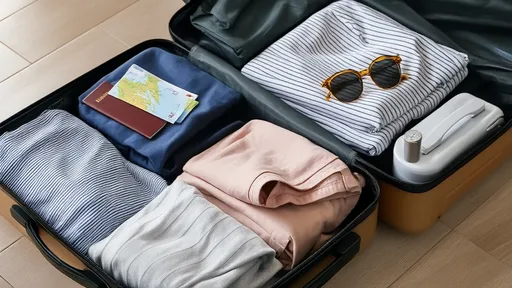
Once a bundle is placed inside the vacuum bag, I seal it and then, using a small, portable electric pump I bought for twenty dollars, I remove the air. The transformation is nothing short of magical. A fluffy pile of clothes that once looked like it would fill half my suitcase collapses into a slim, rigid, and perfectly flat panel. It’s like turning your wardrobe into a set of flat-packed, lightweight boards. These compressed modules are incredibly easy to arrange in my suitcase. They stack neatly, they don't shift during transit, and they create a structured, orderly space that I never knew was possible inside a soft-sided bag.
The true genius of this system, however, reveals itself during the trip itself. This is where it evolves from a simple space-saver into a full-blown travel philosophy. Unpacking at my first accommodation, whether a hotel or an Airbnb, is a matter of minutes. I simply unzip my suitcase, take out the flat, compressed modules, open the one-way valve on the bags, and listen as the air rushes back in. The clothes, freed from their vacuum seal, expand back to their normal size, remarkably unwrinkled because they haven't been jostled and tangled in a free-for-all inside the case. I then place these now-plump bags directly into the drawers or onto the shelves. I am fully unpacked and organized in under five minutes, feeling settled and at home instead of living out of a chaotic suitcase.
But the real game-changer is the return journey. Like most travelers, I always end a trip with more than I started with—souvenirs, gifts, maybe a bottle of local wine. In the past, this meant a frantic, last-minute repacking session, often involving sitting on the suitcase again or, worse, having to buy an extra bag. With the vacuum module system, this problem vanishes. As I use my clothes throughout the trip, the emptied compression bags become my secret weapon. They lie flat at the bottom of my suitcase, taking up virtually no space. On the last day, I simply pack my new acquisitions into these empty bags, seal them, and compress them. That fragile ceramic bowl from a Prague market? Snug and secure inside a cushioned bundle of my dirty laundry. That bottle of French perfume? Wrapped in a soft shirt and vacuum-sealed into immobility. I am not just packing; I am engineering my luggage for a safe and organized return.
The psychological impact of this system was as profound as the physical one. Traveling with a lightweight, effortlessly manageable bag liberated me. I could navigate crowded metro stations with ease, skip up steep staircases in old European train stations without getting winded, and spontaneously hop on a tram without a second thought about my luggage. The constant, low-grade stress of "bag drag" was gone, replaced by a newfound sense of agility and freedom. I was no longer a pack mule; I was a traveler. My energy was focused on the experiences around me—the taste of fresh pasta in Rome, the sound of street musicians in Barcelona, the view from a Parisian café—not on the weight on my shoulders.
Of course, no system is perfect. I had to learn to choose my vacuum bags carefully, opting for thicker, more durable models to prevent punctures. The small electric pump is one more thing to pack, though its utility far outweighs its minimal weight and space. And it requires a power source for a few minutes to re-compress on the return trip, but I've found that even a quick session in a café or at the airport is sufficient. These are minor trade-offs for a monumental upgrade in travel comfort and efficiency.
That initial, baggage-induced nightmare at 30,000 feet now feels like a distant memory, a necessary stumble that set me on the right path. The vacuum compression module hack fundamentally changed my relationship with travel. It transformed packing from a dreaded chore into a strategic, almost enjoyable, pre-trip ritual. It gave me the confidence to travel longer with less, to move freely, and to truly immerse myself in the journey. My suitcase is no longer a burden; it's a perfectly organized, lightweight companion. For anyone who dreams of traveling more and worrying less, this isn't just a packing tip. It's the key to unlocking the world.

By James Moore/Nov 10, 2025

By Samuel Cooper/Nov 10, 2025

By Daniel Scott/Nov 10, 2025
By Elizabeth Taylor/Nov 10, 2025
By William Miller/Nov 10, 2025
By Joshua Howard/Nov 10, 2025

By Joshua Howard/Nov 10, 2025

By Benjamin Evans/Nov 10, 2025

By Daniel Scott/Nov 10, 2025

By Lily Simpson/Nov 10, 2025

By Sophia Lewis/Nov 10, 2025

By Elizabeth Taylor/Nov 10, 2025
By Daniel Scott/Nov 10, 2025
By Emily Johnson/Nov 10, 2025
By Olivia Reed/Nov 10, 2025

By Thomas Roberts/Nov 10, 2025

By Megan Clark/Nov 10, 2025

By John Smith/Nov 10, 2025
By Olivia Reed/Nov 10, 2025

By Ryan Martin/Nov 10, 2025
