I never thought much about walking until the day my world shrank to the size of my apartment. It was during one of those periods when anxiety had wrapped itself around my chest so tightly that breathing felt like a conscious effort. The walls seemed to be closing in, and my thoughts were racing in circles with nowhere to go. On a particularly difficult afternoon, I simply put on my shoes and stepped outside with no destination in mind. That first walk lasted only twenty minutes, but something shifted during those minutes that would eventually become a fundamental part of how I maintain my mental health.
Walking, I've discovered, is far more than transportation or exercise. It's a moving meditation, a way to physically process emotional weight, and a means of reconnecting with the world outside our heads. When I walk, I'm not just moving my body from point A to point B—I'm creating space between my thoughts and my sense of self. The rhythm of footsteps becomes a gentle mantra that slowly untangles the knots in my mind.
There's something profoundly healing about the bilateral stimulation of walking—the alternating left-right movement seems to activate both hemispheres of the brain in a way that static activities don't achieve. This isn't just my personal observation; research in trauma therapy has long utilized bilateral stimulation to help process difficult memories and emotions. When I'm walking, I'm not just thinking about my problems—I'm physically working through them with my entire body.
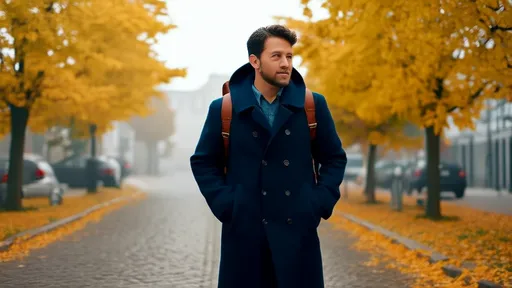
The world looks different when you're moving through it at walking pace. Driving or even cycling creates a barrier between you and your surroundings, but walking allows for a level of engagement that faster modes of transportation simply don't permit. I notice the subtle changes in my neighborhood—the way the light falls through the trees at different times of day, the gradual shift of seasons in the gardens I pass, the small interactions between people that I would otherwise miss. This attentiveness to the external world naturally pulls me out of the endless loop of internal worries.
Walking creates what psychologists call psychological distance—the physical space between yourself and your environment mirrors the mental space you create between yourself and your thoughts. When I'm walking, problems that felt overwhelming while sitting at my desk begin to seem more manageable. Solutions emerge not through forced concentration, but through the gentle rhythm of movement and the changing scenery. It's as if the motion itself shakes loose creative insights and perspectives that remain stubbornly hidden during stationary contemplation.
I've developed what might be considered a walking practice, though I hesitate to call it that because it sounds more formal than it actually is. Some days I walk with intention, focusing on my breath and the sensation of each foot connecting with the ground. Other days, I simply wander, letting my feet choose the direction while my mind drifts where it will. The absence of a specific destination is part of the magic—it's one of the few activities in our goal-oriented society that doesn't require achievement or measurable outcomes.
Weather has become something I experience rather than something I avoid. I've walked in gentle rain that felt like a cleansing, in wind that seemed to blow the cobwebs from my mind, in sunshine that warmed more than just my skin. Each condition offers its own particular gift to the walking experience. The discomfort of walking in less-than-ideal conditions has its own therapeutic value too—it reminds me that I can tolerate discomfort and even find beauty in it.
My walking obsession has taught me about the importance of thresholds and transitions. The simple act of stepping outside my front door creates a psychological shift—I'm leaving the space of responsibilities and to-do lists and entering a realm of possibility. Similarly, returning home feels different when I approach it after a walk; the transition back into domestic space becomes more conscious and intentional.
I've come to understand that walking works on multiple levels simultaneously. Physically, it regulates my nervous system, lowering cortisol levels and increasing endorphins. Mentally, it creates the conditions for what's called diffuse thinking—the kind of background processing that leads to insights and creative connections. Emotionally, it provides a container for whatever I'm feeling without requiring that I analyze or resolve those feelings immediately.
There's also the element of time that walking provides—an expansive, unstructured stretch of it. In a world where every minute is often accounted for and optimized, walking is beautifully inefficient. It takes as long as it takes. This temporal generosity allows thoughts to unfold at their own pace rather than being rushed toward conclusion. I've had breakthroughs on walks that wouldn't have happened in a thirty-minute therapy session or during a focused meditation, simply because walking gives ideas the space and time they need to mature.
The simplicity of walking is part of its power. It requires no special equipment, no membership fees, no particular skill. It's available to almost everyone in some form. This accessibility means it can become a consistent practice rather than an occasional treatment. The cumulative effect of regular walking has done more for my mental health than any single intervention or technique.
I've learned to listen to what kind of walk I need on any given day. Sometimes I need a vigorous, fast-paced walk to discharge restless energy. Other times, a slow, meandering stroll better serves my mood. The ability to adjust the practice to my current state means it's always available to me, regardless of whether I'm feeling agitated, depressed, anxious, or simply stuck.
Walking has also become a way to mark time and create rhythm in my life. The daily walk structures my day in a gentle way, providing a punctuation between work and rest, between engagement and solitude. The weekly longer walks serve as a reset button, clearing the mental clutter that accumulates over days of focused work. The seasonal walks connect me to larger cycles beyond my personal concerns.
Perhaps what I value most about walking is how it grounds me in my body. So much of our lives—especially our mental struggles—happen in the abstract space of our thoughts. Walking brings me back to physical reality: the feeling of my feet on the ground, the air on my skin, the sights and sounds around me. This embodied experience is a powerful antidote to the disembodied nature of anxiety and rumination.
My obsession with walking isn't about counting steps or tracking distance. Those metrics miss the point entirely. It's about the qualitative experience of moving through space with awareness. It's about showing up for whatever emerges during the walk—whether that's clarity, confusion, peace, or simply the recognition that I can carry myself through difficult moments one step at a time.
Walking hasn't eliminated life's challenges or difficult emotions from my experience. What it has done is give me a reliable way to meet those challenges with greater resilience and perspective. It's become my mobile sanctuary, my moving meditation, my steady companion through whatever mental weather I encounter. And on days when the world feels particularly heavy, I know I can always step outside and walk myself back to a more balanced state, one footfall at a time.
By Emily Johnson/Nov 10, 2025
By Amanda Phillips/Nov 10, 2025

By George Bailey/Nov 10, 2025

By Jessica Lee/Nov 10, 2025

By John Smith/Nov 10, 2025

By Rebecca Stewart/Nov 10, 2025

By Joshua Howard/Nov 10, 2025
By Joshua Howard/Nov 10, 2025

By Grace Cox/Nov 10, 2025

By Michael Brown/Nov 10, 2025
By Grace Cox/Nov 10, 2025
By Grace Cox/Nov 10, 2025
By Samuel Cooper/Nov 10, 2025

By Amanda Phillips/Nov 10, 2025

By Natalie Campbell/Nov 10, 2025

By Benjamin Evans/Nov 10, 2025
By Natalie Campbell/Nov 10, 2025
By Victoria Gonzalez/Nov 10, 2025

By Thomas Roberts/Nov 10, 2025

By Michael Brown/Nov 10, 2025
