I remember staring at my reflection in the dusty gym mirror, the same resolution echoing in my mind for the eleventh consecutive year. "This time will be different." The phrase had become a hollow mantra, a New Year's Eve tradition as reliable as the champagne toast that preceded it. My workout clothes, purchased with optimistic fervor, were slowly becoming relics in my drawer, their tags still attached like tombstones for my ambition.
I had failed to stick to a consistent exercise routine ten distinct times. Each failure had its own flavor—a pulled muscle that became an excuse, a busy week that stretched into a sedentary month, a vacation that never ended. I was a connoisseur of quitting.
The turning point wasn't a lightning bolt of motivation. It was a quiet, humbling realization in a doctor's office, holding a printout that showed pre-diabetic markers. The tenth failure had been the most spectacular. I'd invested in a top-tier gym membership, hired a personal trainer for three sessions, and bought enough protein powder to sustain a small army. I lasted three weeks. The crash was brutal. I felt like a fraud, not just to my friends and family who had cheered me on, but to myself. The gap between the person I wanted to be and the person I was had become a canyon I could no longer ignore. This time, I decided to stop trying to build a new me overnight and instead, start investigating why the old me kept sabotaging the effort.
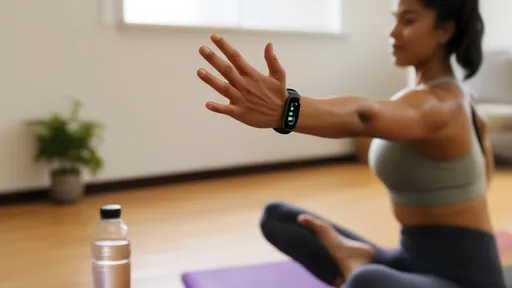
My first revelation was that I had been treating exercise as a punishment. For years, my mental narrative was one of penance. I was atoning for the pizza, for the lazy weekends, for the body I had neglected. My workouts were brutal, hour-long affairs filled with exercises I despised, all set to a soundtrack of self-loathing. I was trying to bully my body into submission. Unsurprisingly, my mind and body eventually staged a mutiny. The eleventh attempt began with a complete reframing. I banned the words "should," "have to," and "need to" from my workout vocabulary. Instead, I asked a simple question: What movement feels good today? Some days, the answer was a brisk walk in the park, feeling the sun on my skin. Other days, it was a slow, deliberate yoga flow. The goal was no longer to burn a specific number of calories, but to connect with my body in a positive way.
This led directly to my second breakthrough: I stopped focusing on goals and started building systems. Previously, my entire motivation was pinned on an end result—lose twenty pounds, run a 5k, get visible abs. These distant, abstract targets provided a short-term spark, but they were useless for the daily grind. When progress was slow, which it always is, my motivation would evaporate. Inspired by writers like James Clear, I shifted my focus from the finish line to the process itself. My goal wasn't "get fit." My system was "put on my workout clothes and move for at least 15 minutes every day after I finish my morning coffee." The barrier for entry was comically low. Fifteen minutes of movement? Anyone can do that. The magic was in the consistency. Showing up for that trivial commitment, day after day, built a foundation of self-trust I had never known.
Of course, the initial enthusiasm wanes. The third week hit, and the old resistance came creeping back. This is where I learned the most critical skill: embracing the minimum viable workout. On a day I felt exhausted, uninspired, and genuinely wanted to bail, I gave myself permission to do the bare minimum. My system said "move for 15 minutes," so I put on my shoes and walked to the end of my street and back. It took twelve minutes. I felt a little silly, but I had kept the chain unbroken. The psychological victory was immense. I had proven to myself that a bad day didn't have to mean a reset to zero. The all-or-nothing mindset was the poison that had killed my previous attempts. By accepting "something" instead of demanding "everything," I built resilience.
Another layer of my success came from addressing the logistical nightmares that had derailed me before. I stopped believing in the myth of willpower. I accepted that after a long day of work, my willpower was depleted. Expecting myself to then drive to a crowded gym, find parking, and navigate complex equipment was a fantasy. So, I made exercise pathologically easy. I created a small, dedicated workout space in my living room with a single yoga mat and a set of resistance bands. My "gym" was five steps away. I also laid out my workout clothes the night before, right on top of my dresser. These tiny acts of preparation removed the friction that my tired brain would use as an excuse. It was no longer a question of "Should I work out?" but rather, "The clothes are right there, and the space is clear, so why not?"
Perhaps the most surprising element was learning to find joy in the mundane. I stopped chasing the "runner's high" and started appreciating the subtle satisfactions. The feeling of my muscles warming up, the rhythm of my breath, the quiet focus that pushed all other thoughts from my mind. I stopped listening to aggressive, high-BPM playlists designed to hype me up and instead listened to podcasts or audiobooks I genuinely enjoyed. My workout time became "me time"—a chance to learn something new or simply be alone with my thoughts without the distraction of a screen. This transformed exercise from a chore I had to endure into a part of my day I began to look forward to.
The final, and most profound, shift was redefining what success looked like. For a decade, success was a number on a scale or a notch on my belt. When those numbers stalled, which they inevitably did, I interpreted it as failure and quit. This time, I started tracking different metrics. I kept a simple journal and noted down non-scale victories. I slept through the night without waking up. I carried the heavy groceries up the stairs without getting winded. My posture felt better during long meetings. The nagging pain in my lower back had vanished. These were the real, tangible benefits that a consistent movement practice was delivering. The scale became irrelevant. My motivation was now internally generated, fueled by how good my body felt to live in, not by how it looked in a mirror.
It has been eighteen months now. I haven't missed a day. Some days are still powerhouse sessions where I push my limits and break a serious sweat. But many days are just that fifteen-minute walk or a gentle stretch. The system accommodates life. It accommodates stress, sickness, and busy schedules because it's built on flexibility and self-compassion, not rigid rules and self-flagellation. I didn't find a magical source of discipline. I didn't discover a secret workout. I simply stopped fighting myself. I stopped seeing my body as an adversary to be conquered and started treating it as a partner to be cared for. The ten failures weren't a waste; they were the necessary data points that taught me everything about how not to do it. The eleventh try worked because it wasn't a battle. It was a truce, followed by a lasting peace.

By Emily Johnson/Nov 10, 2025
By Amanda Phillips/Nov 10, 2025
By George Bailey/Nov 10, 2025

By Jessica Lee/Nov 10, 2025

By John Smith/Nov 10, 2025
By Rebecca Stewart/Nov 10, 2025

By Joshua Howard/Nov 10, 2025

By Joshua Howard/Nov 10, 2025

By Grace Cox/Nov 10, 2025

By Michael Brown/Nov 10, 2025

By Grace Cox/Nov 10, 2025

By Grace Cox/Nov 10, 2025

By Samuel Cooper/Nov 10, 2025

By Amanda Phillips/Nov 10, 2025

By Natalie Campbell/Nov 10, 2025

By Benjamin Evans/Nov 10, 2025

By Natalie Campbell/Nov 10, 2025

By Victoria Gonzalez/Nov 10, 2025

By Thomas Roberts/Nov 10, 2025

By Michael Brown/Nov 10, 2025
