I've always considered myself a reasonably active person. I take the stairs when possible, walk to nearby errands, and even manage the occasional weekend hike. Yet like many people, I found myself staring at a drawer full of abandoned fitness trackers over the years. They were monuments to good intentions, each one a story of initial enthusiasm followed by a slow, quiet decline into obsolescence.
The blinking reminders to move became nagging. The sleep scores induced anxiety. The step counts felt like a meaningless, gamified number that had little to do with how I actually felt. I had resigned myself to the idea that perhaps this technology just wasn't for me—that true motivation had to come from within, not from a silicon band on my wrist.
That changed six months ago when a friend, noticing my cynical stance on wearable tech, handed me a device I hadn't seen before. It wasn't from one of the mainstream giants. Its design was understated, almost minimalist. There was no vibrant, color touchscreen screaming for attention. Skeptical but curious, I decided to give it one last shot. What unfolded was not a revolution, but a quiet evolution of my relationship with my own body and activity. This was the fitness tracker that finally, actually motivated me.
The first differentiator was the setup process. Instead of an overwhelming questionnaire about my life goals and athletic ambitions, it asked a few simple, almost philosophical questions. How do you want to feel at the end of the day? and What does a "good" day look like for you, physically? My answers weren't about marathons or weight loss; they were about having more energy to play with my kids and less stiffness in my shoulders after a long day at the computer. It was clear from the start that this device was not just another taskmaster; it was positioning itself as a partner.
For the first week, it did almost nothing but observe. There were no celebratory vibrations for hitting 10,000 steps, no judgmental red rings for falling short. The accompanying app presented data not as scores, but as gentle observations. You were most restless between 2:00 and 3:00 AM. Was your mind active? or Your heart rate variability suggests you're well-recovered today. A good day for a brisk walk. The language was devoid of the hyper-competitive, performance-driven jargon that saturates the fitness world. It felt less like a coach and more like a thoughtful friend who happened to have a deep understanding of physiology.
The core of its motivational magic, I soon discovered, was its focus on coherence and rhythm rather than volume and intensity. The tracker introduced me to the concept of a "Daily Rhythm Score." This wasn't a single number, but a simple, elegant visualization—a wave. The goal was not to flatten the wave with constant, high-intensity activity, but to have a healthy, natural rhythm with peaks of activity and troughs of rest. On days I was stuck in back-to-back meetings, the wave was flat, a visual representation of stagnation that was far more compelling than a missed step goal. On days I alternated between focused work and movement, the wave looked organic and alive. This simple visual metaphor rewired my brain. I wasn't chasing a number; I was cultivating a rhythm, something deeply and intuitively satisfying.
Another profound shift was its treatment of stress. Where other trackers might flag a elevated heart rate as "fat burn" or simply ignore it, this device had a sophisticated understanding of the nervous system. It would occasionally prompt me with a single, full-screen message: Noticing a stress pattern. Would you like to take a breathing moment? If I accepted, it would guide me through a one-minute breathing exercise, syncing the vibration on my wrist to the inhale and exhale. The result was immediately tangible. I wasn't just being told I was stressed; I was being offered a tangible, immediate tool to alleviate it. This built a level of trust I'd never had with a piece of technology. It proved its value not just in tracking, but in real-time intervention that improved my wellbeing.
The absence of social features was another deliberate and, for me, crucial design choice. There were no leaderboards, no weekly challenges against friends, no public badges. My progress was a private conversation between me and the device. This removed the external pressure and potential for shame that often comes with social fitness apps. My motivation became intrinsic. I was moving because it made my rhythm wave look better, because it felt good, because I wanted to honor the recovery my body had achieved overnight. This device had successfully externalized my internal sense of well-being, giving me a mirror to see my own patterns, free from social comparison.
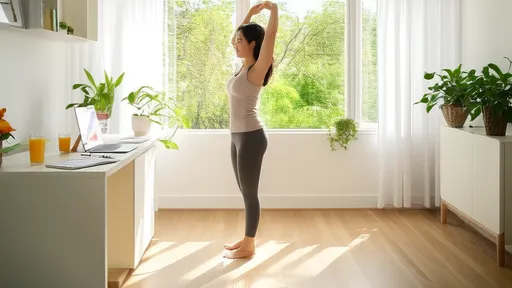
After three months, the changes in my life were subtle but significant. I no longer felt guilty for taking a rest day; in fact, I appreciated them because I could see how they contributed to a healthier overall rhythm. I started taking short, five-minute "pattern breaks" every hour to walk around my home office, not to hit a step goal, but to add a healthy peak to my daily wave. My sleep improved because I started paying attention to the wind-down period before bed, a suggestion the app made based on my restless sleep data. The tracker had faded into the background, a silent facilitator of better habits rather than a demanding overseer.
So, what is the secret? It's not a superior sensor or a longer battery life, though its technical specs are impressive. The motivation came from a fundamental shift in philosophy. This tracker understands that human beings are not machines to be optimized, but complex, rhythmic organisms that thrive on balance and awareness. It trades the loud, gamified language of achievement for the quiet, supportive language of awareness and rhythm. It doesn't shout; it whispers. It doesn't command; it suggests.
I recently opened that drawer of old fitness trackers and smiled. They weren't failures. They were simply designed for a different version of me—a version that thought fitness was about conquering and competing. The tracker on my wrist now speaks to the person I've become, someone who understands that true, sustainable health is about listening, balancing, and finding a graceful rhythm in the chaos of daily life. It's the one that finally motivated me because it was the first one that truly understood me.

By Emily Johnson/Nov 10, 2025
By Amanda Phillips/Nov 10, 2025
By George Bailey/Nov 10, 2025

By Jessica Lee/Nov 10, 2025

By John Smith/Nov 10, 2025
By Rebecca Stewart/Nov 10, 2025

By Joshua Howard/Nov 10, 2025

By Joshua Howard/Nov 10, 2025

By Grace Cox/Nov 10, 2025

By Michael Brown/Nov 10, 2025

By Grace Cox/Nov 10, 2025

By Grace Cox/Nov 10, 2025

By Samuel Cooper/Nov 10, 2025

By Amanda Phillips/Nov 10, 2025

By Natalie Campbell/Nov 10, 2025

By Benjamin Evans/Nov 10, 2025
By Natalie Campbell/Nov 10, 2025
By Victoria Gonzalez/Nov 10, 2025

By Thomas Roberts/Nov 10, 2025

By Michael Brown/Nov 10, 2025
