I never understood the true weight of anxiety until it became my constant companion. It started subtly - a racing heart before presentations, sweaty palms during social gatherings, restless nights before important meetings. But over time, these occasional visitors decided to take up permanent residence in my body and mind. The anxiety grew from manageable discomfort to a life-altering force that dictated my choices, limited my experiences, and colored every waking moment with a hue of dread.
My journey through conventional solutions felt like collecting keys that didn't fit the lock. Therapy provided insights but didn't calm the physiological storms. Medication offered temporary relief but came with side effects that made me feel like a spectator in my own life. Breathing exercises from yoga classes felt helpful in the moment but failed to anchor me during genuine panic attacks. I was beginning to accept that maybe this was just how I was wired - destined to navigate life with this invisible, heavy cloak constantly draped over my shoulders.
The turning point came during a particularly bad panic attack in a grocery store of all places. As I stood frozen in the cereal aisle, heart pounding so violently I thought it might escape my chest, a elderly woman noticed my distress. She didn't offer platitudes or panic with me. Instead, she looked me calmly in the eyes and said "breathe in for four, hold for seven, breathe out for eight." In my desperate state, I grasped at this simple instruction like a drowning person reaching for a lifeline.
That simple sequence - 4-7-8 breathing - became the key that finally unlocked the door to managing my anxiety. At first, I was skeptical that something so elementary could make a difference where so many other interventions had failed. But as I committed to practicing it daily, something remarkable began to happen. The constant background hum of anxiety started to diminish. Panic attacks lost their power when I had this tool to deploy against them. For the first time in years, I felt like I was regaining control over my own nervous system.
The science behind why this particular breathing pattern works so effectively is fascinating. When we experience anxiety, our sympathetic nervous system - responsible for the fight-or-flight response - goes into overdrive. This triggers a cascade of physiological changes: increased heart rate, rapid shallow breathing, muscle tension, and diverted blood flow. The 4-7-8 breathing technique works by activating the parasympathetic nervous system, which serves as the body's natural brake pedal.
What makes the 4-7-8 ratio specifically so powerful is how it manipulates the balance of oxygen and carbon dioxide in our bloodstream. The extended exhalation phase creates a slight accumulation of carbon dioxide, which has a natural sedating effect on the brain. Meanwhile, the breath retention phase helps reset the respiratory centers in the brain, signaling safety to the amygdala - the fear center that often runs amok during anxiety episodes. This combination creates a physiological state that is incompatible with panic.
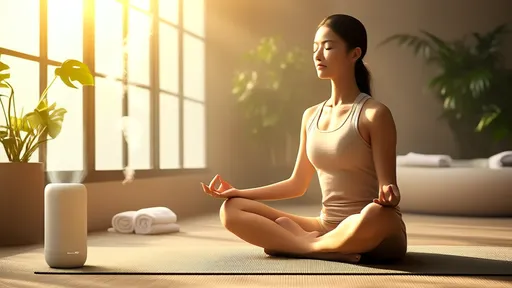
Mastering the technique requires more than just counting numbers. The quality of breath matters tremendously. The inhalation should be quiet and through the nose, filling the diaphragm rather than lifting the shoulders. The retention phase should feel comfortable, not strained. The exhalation should be slow and complete, ideally through pursed lips as if blowing through a straw. This controlled exhalation is particularly important as it stimulates the vagus nerve, the main component of the parasympathetic nervous system.
I began incorporating this breathing hack into my daily routine in three distinct ways. First, as a preventive measure - practicing for five minutes upon waking and before bed. Second, as an emergency intervention during moments of rising anxiety. Third, as a transitional tool between stressful activities. The cumulative effect was transformative. Within weeks, my baseline anxiety level had dropped noticeably. Within months, people started commenting on how much calmer I seemed.
The real test came during situations that would have previously triggered full-blown panic attacks. A last-minute work presentation, an unexpected financial setback, a family conflict - these events still arose, but my response to them had fundamentally changed. Instead of spiraling into helpless panic, I would excuse myself for two minutes, perform a few rounds of 4-7-8 breathing, and return to handle the situation with clarity and composure. The breathing technique hadn't eliminated life's challenges, but it had given me the capacity to face them without being overwhelmed.
What surprised me most was how this simple practice began to rewire my relationship with anxiety itself. Instead of viewing it as an enemy to be defeated, I began to see it as a messenger. The anxiety wasn't the problem - it was my body's exaggerated response to perceived threats. The breathing technique became my way of acknowledging the message without being controlled by the messenger. This shift in perspective was perhaps the most healing aspect of the entire journey.
I've since shared this technique with friends, family members, and colleagues struggling with their own anxiety battles. The results have been remarkably consistent. One friend who suffered from severe social anxiety reported that practicing 4-7-8 breathing before events allowed her to attend gatherings she would have previously avoided. Another who experienced nighttime anxiety found that a few rounds of the breathing technique helped quiet his mind enough to fall asleep naturally.
The beauty of this breathing hack lies in its accessibility. It requires no special equipment, costs nothing, and can be practiced anywhere without drawing attention. Unlike medication, it has no side effects. Unlike many therapeutic approaches, it provides immediate relief while also delivering cumulative benefits with regular practice. It works equally well for generalized anxiety, panic attacks, stress management, and even insomnia.
Of course, I want to be clear that this technique isn't a magic cure-all for severe anxiety disorders. Professional help, therapy, and sometimes medication remain crucial components of treatment for many people. But what the 4-7-8 breathing technique offers is something profoundly empowering - a tool that puts control back into your hands. It demonstrates that within your own body lies the capacity to influence your nervous system, to calm your mind, to find center amidst the storm.
Looking back at that fateful day in the grocery store, I'm filled with gratitude for that stranger who shared this simple wisdom. Her brief instruction set in motion a transformation that therapy, medication, and countless self-help books had failed to achieve. I've come to understand that sometimes the most powerful solutions aren't complicated interventions but rather returning to the fundamental wisdom of the body.
The breath is always with us - this constant, rhythmic companion from our first moment to our last. Learning to work with it consciously, to harness its power to regulate our nervous system, is perhaps one of the most valuable skills we can develop in our anxiety-ridden modern world. The 4-7-8 technique gave me back the life that anxiety had stolen, and for that, I will be forever grateful.
By Emily Johnson/Nov 10, 2025
By Amanda Phillips/Nov 10, 2025
By George Bailey/Nov 10, 2025

By Jessica Lee/Nov 10, 2025

By John Smith/Nov 10, 2025
By Rebecca Stewart/Nov 10, 2025
By Joshua Howard/Nov 10, 2025
By Joshua Howard/Nov 10, 2025
By Grace Cox/Nov 10, 2025
By Michael Brown/Nov 10, 2025
By Grace Cox/Nov 10, 2025
By Grace Cox/Nov 10, 2025
By Samuel Cooper/Nov 10, 2025
By Amanda Phillips/Nov 10, 2025
By Natalie Campbell/Nov 10, 2025
By Benjamin Evans/Nov 10, 2025
By Natalie Campbell/Nov 10, 2025
By Victoria Gonzalez/Nov 10, 2025
By Thomas Roberts/Nov 10, 2025
By Michael Brown/Nov 10, 2025
