It was another one of those nights when sleep seemed like a distant relative who'd forgotten my address. The clock ticked past midnight, and my stomach began its familiar symphony of discontent. This wasn't just hunger—this was the kind of primal craving that makes you consider things you'd normally never eat, the culinary equivalent of texting an ex at 2 AM.
I'd been through this cycle countless times before. The late-night refrigerator raid, the subsequent guilt, the sugar crash that left me feeling worse than when I started. I'd tried everything from sheer willpower (which lasted approximately three nights) to going to bed ridiculously early (which just meant I lay awake hungry for longer). Nothing worked until I discovered three simple snacks that didn't just satisfy my cravings but actually made me feel good afterward.
The first revelation came during a particularly desperate evening when I found myself staring into the abyss of my nearly empty pantry. There, hiding behind a box of expired crackers, was a jar of almond butter I'd bought months earlier for a recipe I never made. Next to it sat a single banana that had just reached that perfect stage of ripeness—still firm but sweet, with a few brown freckles appearing on its skin.
I sliced the banana into coins and dipped them into the almond butter, creating what looked like miniature edible satellites. The first bite was transformative. The creamy richness of the almond butter complemented the banana's natural sweetness in a way that felt indulgent yet wholesome. Unlike the sugar rush and subsequent crash I got from cookies or ice cream, this combination left me satisfied and steady.
The magic, I later learned, was in the balance—the healthy fats and protein from the almond butter slowed the absorption of the banana's natural sugars, preventing the blood sugar spike and crash that makes late-night snacking so problematic. Plus, bananas contain potassium and magnesium, both of which can help with muscle relaxation and sleep quality. I wasn't just feeding a craving; I was actually preparing my body for rest.
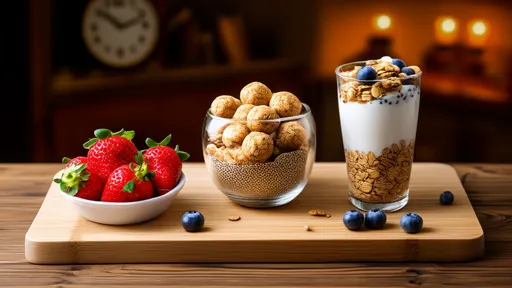
My second discovery happened almost by accident during a weekend meal prep session. I'd made a large batch of Greek yogurt parfaits for breakfasts throughout the week, layering plain Greek yogurt with fresh berries and a sprinkle of cinnamon. One evening, too tired to even consider preparing a proper snack, I grabbed one from the fridge.
The contrast between the tart yogurt and sweet berries was immediately satisfying, but what surprised me most was how full I felt afterward. Where I might normally eat an entire bag of chips while watching a movie, a single serving of this yogurt parfait left me completely satisfied. The protein in Greek yogurt—nearly twice as much as regular yogurt—creates a lasting feeling of fullness, while the berries provide fiber and natural sweetness without refined sugar.
What made this snack particularly brilliant was its versatility. Sometimes I'd add a teaspoon of honey if I wanted something sweeter, or mix in some chia seeds for extra fiber and omega-3s. During winter months, I'd gently warm the berries before adding them to the yogurt, creating a comforting, almost dessert-like treat that felt luxurious but was actually incredibly healthy.
The third game-changer in my late-night snacking revolution came from an unexpected source: my grandmother's recipe box. While visiting her one weekend, I mentioned my struggle with late-night hunger, and she nodded knowingly before pulling out a faded index card for what she called "sleepy-time popcorn."
This wasn't the butter-drenched movie theater popcorn or even the artificially flavored microwave variety. Her recipe involved air-popped popcorn lightly misted with olive oil and sprinkled with nutritional yeast, garlic powder, and a pinch of sea salt. The result was surprisingly addictive—savory, slightly cheesy, and satisfyingly crunchy without being heavy or greasy.
The beauty of this snack lies in its psychological and physical benefits. The act of eating something crunchy and substantial satisfies the oral fixation that often drives mindless snacking. Meanwhile, the fiber in popcorn helps regulate digestion, and the modest amount of healthy fat from the olive oil ensures the satisfaction lasts. Nutritional yeast—often called "nooch" by health enthusiasts—provides B vitamins and a savory, cheese-like flavor without dairy.
What struck me about all three of these snacks was how they addressed different types of cravings. The banana with almond butter satisfied my sweet tooth, the Greek yogurt parfait handled creamy dessert cravings, and the savory popcorn replaced my desire for salty, crunchy snacks like chips or crackers.
More importantly, these snacks changed my relationship with late-night eating. Instead of viewing it as a failure of willpower or a guilty pleasure, I began to see it as an opportunity to nourish my body. The right snacks could actually support better sleep rather than disrupting it, providing nutrients that helped rather than hindered my body's nighttime repair processes.
The transformation wasn't immediate, and there were certainly nights when the siren song of leftover pizza proved too strong to resist. But gradually, these healthy options became my default rather than my fallback. I started keeping the ingredients for these snacks consistently stocked, making the healthy choice the easy choice when willpower was at its lowest ebb.
I also noticed unexpected benefits beyond just satisfying my hunger. My sleep quality improved—I woke up less frequently during the night and felt more rested in the morning. The 3 AM anxiety that often accompanied my late-night snacking sessions disappeared, replaced by a sense of calm satisfaction. Even my skin seemed to improve, likely due to better hydration and more stable blood sugar levels overnight.
What began as a simple solution to a practical problem evolved into a broader understanding of how our bodies work with rather than against our natural rhythms. Nighttime hunger isn't necessarily something to fight or feel guilty about—it's our body's way of asking for fuel to get through the long fast until morning. The key isn't to ignore these signals but to answer them wisely.
These three snacks taught me that the best solutions are often the simplest ones. They don't require exotic ingredients or complicated preparation—just a little knowledge about how different foods affect our bodies and the willingness to make small changes that add up to significant differences.
Now, when the clock ticks past midnight and my stomach begins its familiar rumble, I no longer face a moral dilemma or a battle of wills. I simply choose from my trio of trusted options, each satisfying in its own way, each supporting rather than sabotaging my health goals. The late-night cravings that once felt like a weakness have become an opportunity—a chance to practice self-care in its most immediate and tangible form.
The journey from chaotic late-night binges to peaceful, purposeful snacking didn't require superhuman willpower or drastic lifestyle changes. It just took finding the right tools for the job—three simple snacks that turned my biggest dietary challenge into one of my most consistent healthy habits.

By Emily Johnson/Nov 10, 2025
By Amanda Phillips/Nov 10, 2025

By George Bailey/Nov 10, 2025

By Jessica Lee/Nov 10, 2025
By John Smith/Nov 10, 2025
By Rebecca Stewart/Nov 10, 2025
By Joshua Howard/Nov 10, 2025

By Joshua Howard/Nov 10, 2025
By Grace Cox/Nov 10, 2025

By Michael Brown/Nov 10, 2025

By Grace Cox/Nov 10, 2025

By Grace Cox/Nov 10, 2025

By Samuel Cooper/Nov 10, 2025
By Amanda Phillips/Nov 10, 2025
By Natalie Campbell/Nov 10, 2025
By Benjamin Evans/Nov 10, 2025

By Natalie Campbell/Nov 10, 2025

By Victoria Gonzalez/Nov 10, 2025
By Thomas Roberts/Nov 10, 2025
By Michael Brown/Nov 10, 2025
