There's a certain magic that happens in the quiet hours of the morning, a time before the world awakens and demands our attention. For years, my mornings were a frantic scramble—a blur of caffeine, notifications, and a low-grade hum of anxiety about the day ahead. I was functional, but I was operating on a foundation of tension.
My body felt like a collection of stiff hinges and tight wires, a physical manifestation of the mental load I carried. Then, almost by accident, I stumbled upon a ritual that didn't just change my mornings; it recalibrated my entire relationship with my body and my day. It wasn't a complex workout regimen or a punishing fitness challenge. It was three simple stretches.
I want to be clear from the outset. This isn't about achieving gymnast-level flexibility or contorting oneself into pretzel-like shapes. This is about reacquainting yourself with your own physical vessel. It's a gentle, non-negotiable conversation you have with your body at the start of each day. The beauty of this practice lies in its profound simplicity. It requires no special equipment, no expensive gym membership, and only a small, sacred slice of your time. The return on that investment, however, has been nothing short of life-changing.
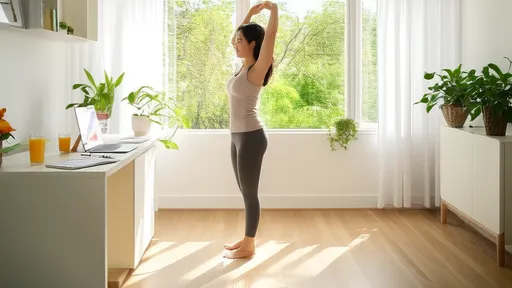
The first of my three morning anchors is what I've come to call the Sunrise Salute Reach. As soon as my feet touch the floor, I don't head for the coffee machine. I stand tall, feet hip-width apart, and ground myself. I take a deep, intentional breath, and as I inhale, I sweep my arms out and up overhead, reaching for the ceiling with my fingertips. I don't just fling my arms up; I feel the engagement from my lat muscles in my back, all the way through my obliques. I imagine my spine lengthening, vertebra by vertebra, creating space where there was compression from sleep. On the exhale, I gently hinge at my hips, softening my knees, and fold forward, letting my head and arms hang heavy toward the floor. This isn't a forced hamstring stretch; it's a release, a surrender of tension from my neck and shoulders. I hang here for a few breaths, feeling the gentle pull in the backs of my legs and the delightful release in my back. Then, with a slow inhale, I reverse the movement, rolling up through my spine until I'm standing tall again, arms overhead. I repeat this fluid motion five times.
The effect of this single sequence is immediate and powerful. It acts as a reboot for my entire circulatory and muscular system. That familiar morning stiffness simply melts away. It's as if I'm physically unpacking the inertia of the night and preparing my body for vertical movement. The act of reaching upward feels optimistic, like I'm physically embracing the potential of the new day, while the forward fold provides a moment of quiet introspection and release. This stretch has single-handedly eliminated the lower back tightness that used to nag me for the first few hours of my day. It’s a full-body wake-up call that is far more effective than any alarm clock.
My second stretch targets the epicenter of modern malaise: the shoulders and upper back. I call this one the Doorway Decompressor. We live in a world of forward hunching—over screens, over steering wheels, over kitchen counters. Our pectoral muscles become shortened and tight, pulling our shoulders forward into a defensive, cave-like posture. To counter this, I find a doorway. Placing my forearms on the doorframe, elbows slightly below shoulder height, I take a gentle step forward until I feel a deep, satisfying stretch across my chest and the front of my shoulders. I keep my spine long and my neck relaxed. I hold this position, breathing deeply into the tension for thirty to forty-five seconds.
The transformation this stretch has wrought is difficult to overstate. For years, I carried a permanent knot of tension between my shoulder blades. I assumed it was just part of being an adult with responsibilities. The Doorway Decompressor taught me otherwise. That first time I did it, I felt a series of subtle pops and releases in my upper back, not cracking, but a feeling of things sliding back into their proper place. The chronic ache that I had accepted as my normal began to dissipate within a week. Posturally, the change was noticeable. I stood taller, my shoulders naturally rolling back instead of slumping forward. This physical opening seemed to create a mental opening as well; I felt less defensive, more open to the world, and the shallow breathing that often accompanies a cramped chest was replaced with fuller, deeper breaths.
The final piece of my morning trilogy is the Kneeling Hip Flexor Lunge. If the first stretch wakes up the back and the second opens the front, this one addresses the core, the very center of our stability. So much of our day is spent sitting, which causes the powerful hip flexor muscles at the front of our hips to shorten and tighten. This can lead to a cascade of issues, including lower back pain and a compromised gait. From a kneeling position, I step one foot forward into a lunge, ensuring my front knee is stacked above my ankle. Then, I gently tuck my tailbone and engage my glute on the back leg, leaning slightly forward until I feel a deep stretch in the front of the hip of the back leg. I hold for thirty seconds on each side, focusing on maintaining a tall, upright torso.
The impact of this stretch was the most surprising of all. I never considered my hips to be particularly tight, but this stretch revealed a stunning amount of stored tension. Releasing these muscles created a newfound sense of stability and power in my walk. My lower back, which was already feeling better from the first stretch, felt even more supported, as if the foundation of my movement had been reinforced. It connected my upper and lower body in a more integrated, fluid way. Simple actions like walking up stairs or getting out of a chair became smoother, more effortless motions. It grounded me, quite literally, providing a stable base from which to launch into the day's activities.
Individually, each of these stretches addresses a key area of physical neglect in our modern lives. But their true power is revealed in their synergy. Performed in sequence, they create a holistic reset. The Sunrise Salute establishes length and circulation, the Doorway Decompressor counteracts our hunched posture, and the Hip Flexor Lunge grounds and stabilizes the core. Together, they don't just stretch muscles; they re-pattern movement, undo the physical damage of sedentary life, and set a new, positive trajectory for the body.
The mental and emotional shifts have been just as significant, if not more so. This ten-minute ritual has become my daily meditation in motion. It is a time of pure, undivided attention to the sensations within my body. The focus on breath and gentle movement silences the morning mental chatter before it can gain a foothold. The anxiety that used to greet me the moment I opened my eyes has been largely replaced by a sense of calm agency. By prioritizing this act of self-care, I am sending a powerful message to myself: my well-being is important. I am worth this time.
This practice has cultivated a deeper mind-body connection that I carry with me long after the stretching is done. I am more aware of my posture as I sit at my desk, noticing when I begin to slouch and consciously correcting it. I am more attuned to the early signs of tension in my shoulders and will often take a micro-break to roll them back. This ritual has made me a more mindful inhabitant of my own body. The discipline of showing up for myself each morning, regardless of how I feel, has also built a resilience that permeates other areas of my life. It's a small daily victory that sets a tone of accomplishment and self-respect.
When people ask me about the secret to more energy or less stress, I no longer search for a complicated answer. I tell them about my three stretches. I see the skepticism sometimes—how can something so simple be so transformative? I understand that skepticism because I once shared it. But the proof is in the lived experience, in the quiet dissolution of chronic pain, in the newfound ease of movement, and in the profound sense of starting each day centered and empowered. It’s a gentle revolution, one morning stretch at a time.

By Emily Johnson/Nov 10, 2025
By Amanda Phillips/Nov 10, 2025

By George Bailey/Nov 10, 2025

By Jessica Lee/Nov 10, 2025

By John Smith/Nov 10, 2025

By Rebecca Stewart/Nov 10, 2025

By Joshua Howard/Nov 10, 2025

By Joshua Howard/Nov 10, 2025

By Grace Cox/Nov 10, 2025

By Michael Brown/Nov 10, 2025
By Grace Cox/Nov 10, 2025
By Grace Cox/Nov 10, 2025
By Samuel Cooper/Nov 10, 2025

By Amanda Phillips/Nov 10, 2025

By Natalie Campbell/Nov 10, 2025

By Benjamin Evans/Nov 10, 2025

By Natalie Campbell/Nov 10, 2025
By Victoria Gonzalez/Nov 10, 2025

By Thomas Roberts/Nov 10, 2025

By Michael Brown/Nov 10, 2025
